In Multiple Sclerosis tremors are common.
Tremors cause a back-and-forth rhythm. Some tremors can be irregular and unpredictable. Tremors could also be caused by muscle weakness, poor poster or even medicines.
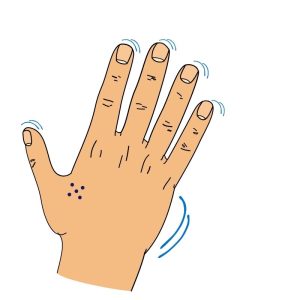
Types of tremors
Intention tremor
This tremor appears when trying to reach out for something or do something. As you reach out for the object, as you get closer to it the tremors get worse.
Postural tremor
This comes on when you are trying to sit or stand. The body shakes while the muscle try to hold steady against the force of gravity.
MS tremors comes mainly on the arms and legs although it could come on other parts of the body such as the head. When tremors come on the lips, tongue or jaw it could make speech less clear. When it comes on the eye coordinating the eyes can be difficult. Tremor cause exhaustion as it uses up a lot of energy.
MS Tremors surfaces when nerves to and from the part of the brain called “cerebellum” is damaged. Cerebellum keeps the body’s balance and coordination.
Twitching is harmless and goes away quickly but can come back over the next few days.
Many activities can be affected by tremors. Eg. Eating, writing, dressing, shaving etc.

It is important that people with MS be active, because it could lead to pain, fatigue, worsening stiffness and other symptoms.
At its inception identifying what help is needed to manage it is difficult. Help should be the one that reduces its impact on the person with Multiple Sclerosis.
Not drinking enough water could lead to twitching and spasms as the muscles get affected. Also sweating has a bearing on body fluids as well as when sick. Lack of sleep could also bring down electrolytes. Tiredness can be another reason for muscle spasms.
Twitches of the eye if it last more than a few days could lead to dry eyes or glaucoma.
Triggers can range from stress, smoking, bright light, too much caffein or lack of sleep.
Initially water therapy, yoga, Physical, stretching and exercising muscles could help to manage mild spasticity.
Minerals such as magnesium and potassium have a direct effect as muscles require them to keep the body working properly. When it is low, the body sends a message in the form of cramps and spasms. Diarrhea or vomiting could lower electrolytes.
Multiple Sclerosis Association of Lanka
111, Inner Flower Road
Colombo-3
Tel/WhatsApp: 0777319333
Email: msalinfo@sltnet.lk
Web: www.mssrilanka.org