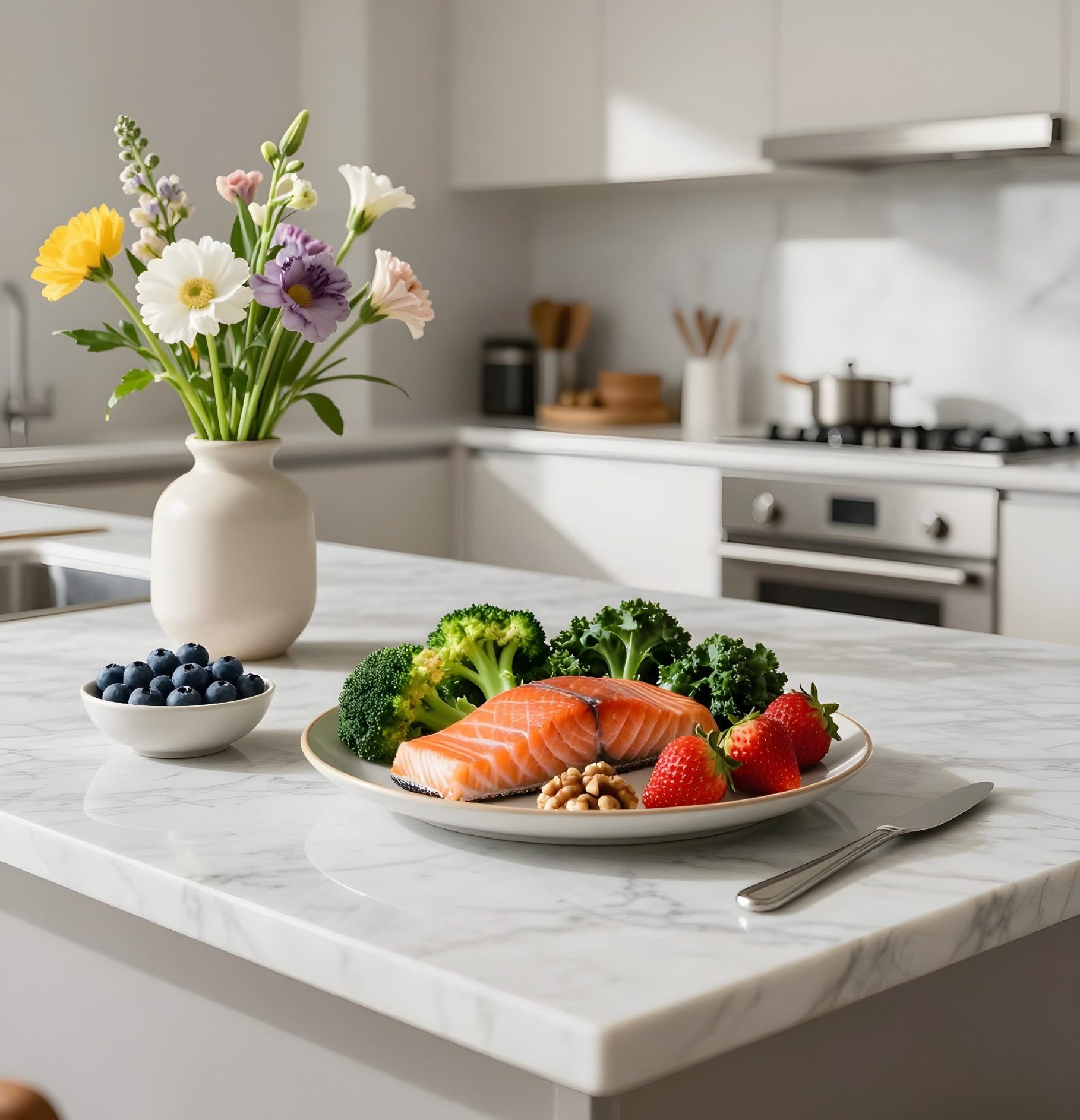
A balanced diet can
give you more energy.
Having a balance diet can help to improve mood, give more energy and help to think more clearly.
Eating a balanced diet affects MS including the digestive system. Eating food that is nutritious can help heart disease, diabetes and improve mood which can have an effect on MS.
Although there is no specific diet plan for Multiple Sclerosis, eating healthy food and right amount of it, helps to keep you energetic.


Healthy body
Eating a healthy diet will and managing a healthy body weight is essential for people with Multiple Sclerosis and can reduce relapses and lesions and related disability. It would affect cardiovascular factors such as blood pressure, high cholesterol levels and diabetes, which could affect the immune system. Increased body weight could have a impact on cardiovascular health.
Tips for a balanced diet:
(1). Take foods low in fat and high in fiber such as fruits, vegetables and grains.
(2). Eat lean proteins such as chicken, fish, beans and eggs and use olive oil, avocados and nuts.
(3). Reduce sugary food and snacks.
(4). Stay hydrated.
(5). Eat smaller meals frequently to maintain steady energy levels.

Eat healthy
Stress also has an impact on gut health. Stress such as sleep deprivation, lack of exercise, notice pollution and psychological stress, can have an adverse impact on gut health.
Smoking can have an indirect effect on health.
The bacteria in the gut is impacted by bad diet and it has an adverse effect on the immune system.
Probiotics and prebiotics keeps us healthy. Probiotics such as yogurt, sourdough bread, Kefir and sauerkraut and prebiotics such as onions, garlic, asparagus and banana, keeps us healthy.

Managing a Balance diet recommended by people with Multiple Sclerosis.
(1). In place of white sugar use maple syrup, molasses, coconut sugar, honey. Adding a few drops of apple cider vinegar to lessen addiction.
(2). Use slow cooker.
(3). Make your own fancy cake and biscuit so that the ingredients are known.
(4). Plan your menu early.
(5). Increase quantity of food so some portions could be frozen for later use when MS symptoms are worse.
(6). Accept the fact that lifestyle changes and food intake will be necessary
(7). Expose to early morning sun to get vitamin D.
(8). An occasional treat is possible.


Vitamin D
Vitamin D is absolutely necessary for people with Multiple Sclerosis. Sunshine is the best for this and the body gets 90% by being in the early morning sun. If you are unable to get the sun then a Vitamin D supplement is necessary. However, some say that staying in the sun must be while they are young and hasn’t such an effect on adults.
Weight
& Multiple Sclerosis
Weight loss
The symptoms of Multiple Sclerosis could result in weight loss. Symptoms such as inability to swallow, fatigue side effects of medicine, anxiety, depression and stress could lead to weight loss.
Weight gain
When inactive weigh gain leads to weight gain. Here again side effects of medicine could gain weight. The stress, anxiety and depression could lead to weight gain.
Diets used to lose weight fast should be avoided. Weight loss of ½ to 1kg per week is acceptable

TIPS for better management of Vitamin D:
(1). Adequate calcium levels for bone health.
(2). Monitor Vitamin D levels which reduces absorption of calcium.
(3). Avoid alcohol and stop smoking.
(4). Exercise regularly


Healthy diet should:
Keep a healthy weight.
Manage fatigue so it makes one less tired.
Regular bowel and bladder habits.
Keep a healthy skin.
Bones healthy and strong.
Healthy teeth and gums.
Improve muscle strength.
Increase flexibility.
There are some people who are unable to absorb the vitamin D which comes with sunlight.
They are –
(1). Dark skinned people from Africa and South Asia
(2). Elderly
(3). Those who have a medical condition which prevents the body making vitamin D.
(4). Staying in the sun alone does not impact the vitamin D level that is necessary, therefore food rich in vitamin D must be taken as well as taking supplements.

Multiple Sclerosis Association of Lanka
111, Inner Flower Road
Colombo-3
Tel/WhatsApp: 0777319333
Email: msalinfo@sltnet.lk
Web: www.mssrilanka.org